
The Cost of Compression
Capital tightens, supply chains politicize, energy stays volatile—risk is pushed down the stack. Offshore ops enter a compression phase.

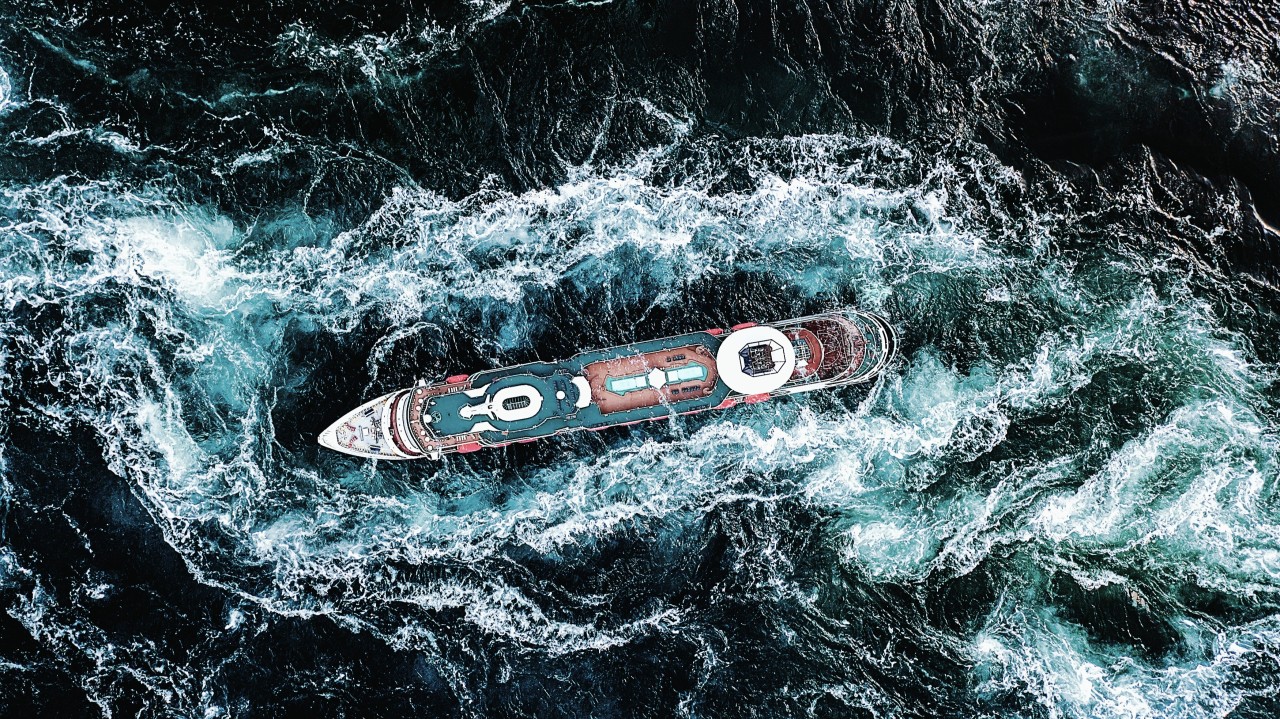
How capital, supply chains, and energy volatility are tightening offshore and maritime operations
January 2026 feels a bit different. A bit heavier.
Markets keep moving, but they no longer explain much. Political events stack faster than they can be processed. Skilled people find themselves suddenly out of work. Not because they failed, but because tolerance for uncertainty is collapsing. Offshore wind, once framed as inevitable, now feels stuck in place.
This isn’t panic. It’s pressure. And pressure is a system signal.
What we are living through is not a single crisis, and not a conspiracy. It is a compression phase. Multiple constraints are tightening at the same time, and the system is adjusting by pushing risk outward and downward, wherever it can.
Offshore and maritime industries sit inside physical systems. Energy moves through infrastructure. Goods move through routes. Projects move through contracts, permits, vessels, and capital. None of this is abstract. When one element gets destabilized, the rest do not magically compensate. They actually transmit the instability.
Over the past months, several shifts have occurred together. Capital became more selective. Financing assumptions that held for years, simply don't hold anymore. Long-cycle projects feel exposed when money wants faster clarity and wider margins.
Supply chains have become politicized. Trade measures, sanctions, compliance requirements, and informal restrictions added friction to routes once treated as neutral. The time between decision and delivery has become longer, more variable, and less predictable. Suppliers have become slower and more conditional in committing to price, capacity, delivery dates, and scope. Risk stopped being an implicit assumption and began shaping planning discussions.
Regulatory frameworks have not adapted their speed, sequencing, or flexibility to match the compression now affecting capital, supply chains, and execution.
Projects remain exposed to volatility in energy-priced materials, transport, and operations. Steel, transport, vessels, and labor are still priced through fossil energy and global logistics. Offshore wind does not escape this. It inevitably carries it.
When systems tighten up, asymmetry becomes visible.
Developers can delay decisions. Utilities can rebalance portfolios. Financial institutions can reprice, pause, or step aside. Governments can adjust targets and timelines.
But much of the supply chain cannot.
In compressed systems, flexibility does not distribute evenly.
Optionality concentrates at the top. In balance sheets, portfolios, and policy timelines. Volatility, meanwhile, is absorbed operationally.
It shows up as cost before prices adjust, delay locked into fixed commitments, utilisation risk pushed onto assets, and uncertainty carried by crews and professionals keeping complex operations running with less margin for error.
This is not about blame. It is about structure.
That structural asymmetry explains why frustration grows even where demand still exists. The work is there. Confidence is not.
The most common explanation offered for offshore wind’s struggles is familiar: subsidies are falling, policy is inconsistent, politics are unstable.
That explanation is incomplete.
Subsidies improve project revenue, but they do not fix the sources of instability that derail delivery. They do not lock in material prices, vessel availability, financing terms, or permitting timelines. When those variables shift together, restoring incentives does not restore certainty. It only shifts when and where pressure emerges.
Another explanation assumes the problem can be solved through technology alone. This also misses the point.
The problem is not lack of information. It is lack of capacity to absorb volatility without breaking people and processes. Visibility helps. It does not create margin. It does not shorten weather windows. It does not carry steel offshore.
What is happening now is not a technological revolution. It is a response to instability.
This is where many leaders feel stuck.
They are told to move faster, digitalize more, restructure teams, and adapt. At the same time, they are asked to reduce risk, cut costs, and maintain delivery. These demands pull in opposite directions.
People feel this tension personally. They are expected to stay flexible while building stability. To commit while keeping options open. To plan long-term while the ground keeps shifting beneath them.
Decision-making becomes heavier because coordination that once happened informally now requires explicit alignment across more people, risks, and constraints.
This is the quiet shift underway.
Companies are re-evaluating what they can realistically control, not in strategy decks, but in daily operations. They are paying closer attention to where delays originate, not just where they appear. They are questioning contracts and plans that assume fixed timelines, all while recognizing how much coordination still depends on manual tracking, informal workarounds, and individual experience.
They are turning to systems and tooling because manual coordination can no longer keep track of the dependencies, risks, and changes involved.
When systems are stable, manual coordination works. When systems tighten, it becomes a liability.
The shift underway is not about optimization. It is about survival under compression.
For leaders in offshore, maritime, and energy, this demands a change in decision-making discipline.
• Stop treating volatility as temporary noise. It is now a baseline condition.
• Stop assuming the system will stabilize before your decisions matter. It will not wait.
• Stop believing clarity comes from better forecasts. It comes from mapping real constraints and building operational or contractual margin around them.
What matters now is not speed, but resilience. Not growth stories, but the ability to adapt without burning out teams or breaking contracts.
The leaders who navigate this period best will not be the loudest or the most optimistic. They will be the ones who understand where pressure enters the system, where it accumulates, and how to prevent it from overwhelming people.
Under sustained pressure, clarity is produced not by adding information, but by limiting decisions to the variables an organization can realistically influence. Otherwise, strategy becomes reactive, shaped by exposure to uncertainty rather than deliberate choice.
Dimitris Galantis has over a decade of experience in offshore energy and maritime operations, bridging hands-on industry knowledge with digital transformation and AI adoption. He is the co-founder and director of Intoolecta, a consulting firm focused on strategy, technology, and workforce solutions.
Ready to build what works
Let's talk about your operation and where structure can make the difference.
