
Energy Inequality - The New Class Divide
AI is turning electricity into a class divide: Big Tech locks in power, while households, SMEs and industry compete for what’s left.

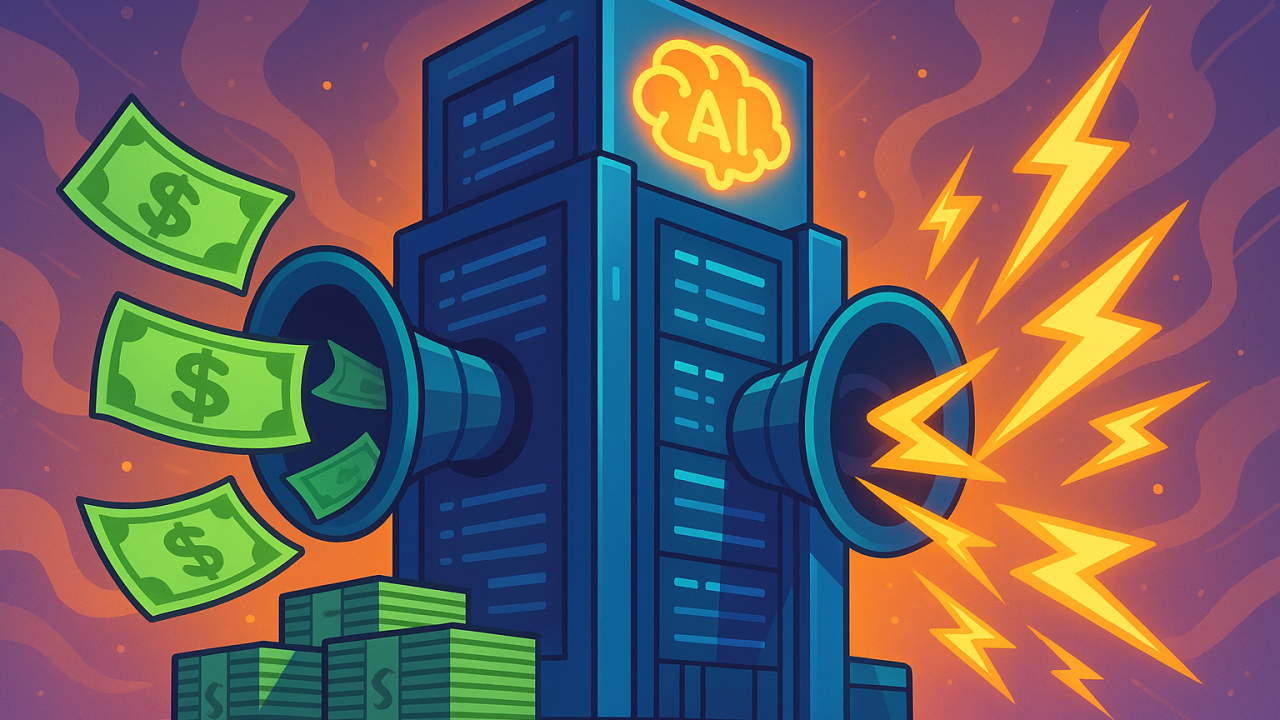
The next divide won’t be between the rich and the poor. It will most likely be between the powered and the powerless. The world is quietly entering an era where access to energy, and not capital, or data, will decide who survives and who scales. As AI devours electricity and Big Tech expands into utilities, the same pattern we saw in finance and data is repeating in energy. Consolidation at the top, scarcity below. We’re witnessing the rise of a new social class — what a friend recently called “the energy deplorables.” Those priced out of the current.
The Hunger of the Machine
The AI economy runs on an invisible fuel, electricity. Every model trained, every query answered, every simulation rendered, consumes power at industrial scale.
Today’s largest data centers already draw as much electricity as a mid-sized European city. The IEA warns that by 2030, data center consumption could double, reaching nearly 1,000 terawatt-hours, more than Japan’s entire current use. Cooling alone is reshaping local water cycles. And while the hype sells “virtual intelligence,” the reality is physical. AI runs on metals, megawatts, and minerals.
The paradox is clear. The more “virtual” our economy becomes, the more brutally material its foundation must be.
When Energy Runs Short, Industry Bleeds First
Europe already got a taste of what that means. After 2022, when power prices spiked following the Ukraine war, over one million tonnes of primary aluminium capacity were shut down. Plants like Slovalco in Slovakia and Alro in Romania couldn’t compete for electricity — the electrons were worth more elsewhere.
That’s what happens when scarcity meets speculation. The tangible economy retreats, the digital one expands. If AI continues bidding up global demand for power, aluminum will not be the last casualty. Next come shipyards, fabrication yards, and offshore supply chains — the physical backbones of the energy transition itself.
Renewables | From Revolution to Requirement
Not long ago, renewables were the symbol of liberation. Clean, decentralized, democratic. Now they’ve become the maintenance line of the AI economy. Wind farms and solar parks are no longer replacing fossil fuels. They’re sustaining additional digital load.
Big Tech signs entire wind portfolios before they reach the grid. Every new solar array or offshore turbine ends up feeding data centers under 20-year corporate PPAs. SMEs and citizens buy what’s left, the volatile remainder.
This isn’t the green revolution we were promised. It’s a privatized grid for a global server farm.
Maritime | The Hidden Frontline
The maritime and offshore sectors are carrying this transformation on their backs and getting none of its rewards.
Ships transport turbine blades, cables, and batteries. Yards retrofit fleets for low emissions. Crews maintain offshore substations in rough seas. Yet the same sectors are punished with rising fuel prices, carbon taxes, and regulatory overhead.
Meanwhile, data operators burn through energy quotas that dwarf industrial usage, without any of the accountability.
Maritime powers the servers of the future but can barely afford the power bills of the present. And that mirrors a deeper truth. The physical world still sustains the digital, even as capital flows the other way.
Energy as Class
Energy access is becoming the new social hierarchy.
• Households face variable tariffs, paying more at peak hours while corporations lock in fixed rates for decades.
• SMEs carry the cost of “green” compliance without the means to hedge.
• Developing countries lease their sunlight and land for solar exports while still facing blackouts at home.
AI and Big Tech have become the world’s most powerful utilities, not because they produce energy, but because they absorb it.
We once measured inequality in wages and wealth. Now we’ll measure it in kilowatts and water rights.
The Mirage of Decentralization
In response, many turn to the dream of going off-grid. Solar panels, home batteries, energy independence.
It’s a noble instinct, but not a systemic fix. Even “decentralized” setups depend on imported lithium, inverter electronics, and maintenance chains owned by the same global suppliers. At best, they buy time. At worst, they shift responsibility from states to citizens.
Real decentralization isn’t about hardware, it’s about governance. Who controls the flow, who sets the price, who decides whose lights stay on.
What Will Stay After the Boom
Not everything about this AI surge is hollow. Just as the dot-com bubble left behind the fibre-optic web we still use, this one will leave tangible progress such as stronger grids, better forecasting, cleaner baseload generation. But only if governments keep those assets public, not captive to corporate data farms.
The infrastructure we build to feed the AI boom will outlive it. The question is: who will own it when the dust settles?
What Needs to Change
1. Energy policy must become social policy. Power access defines opportunity. Treat it as a right, not a commodity.
2. Industrial strategy must protect the productive layer. Don’t let fabrication, shipping, or heavy industry be sacrificed to speculative energy demand.
3. AI and data must pay their true cost. If you consume the output of a power plant, you contribute to the grid that sustains it.
The Message
The next class divide won’t be defined by income — but by wattage. Because those who control the current will control the future.
And if we let the power of intelligence concentrate in the same hands that own the energy to run it, then the “smart” economy will become the dumbest mistake we’ve ever made.
Dimitris Galantis has over a decade of experience in offshore energy and maritime operations, bridging hands-on industry knowledge with digital transformation and AI adoption. He is the co-founder and director of Intoolecta, a consulting firm focused on strategy, technology, and workforce solutions.
Ready to build what works
Let's talk about your operation and where structure can make the difference.
