
Europe at Sea | The East Med, the Trade War, and a union adrift...
EU talks autonomy as the East Med is redrawn by Turkey, Egypt and the US; a U.S.–China port-fee clash hits shipping.

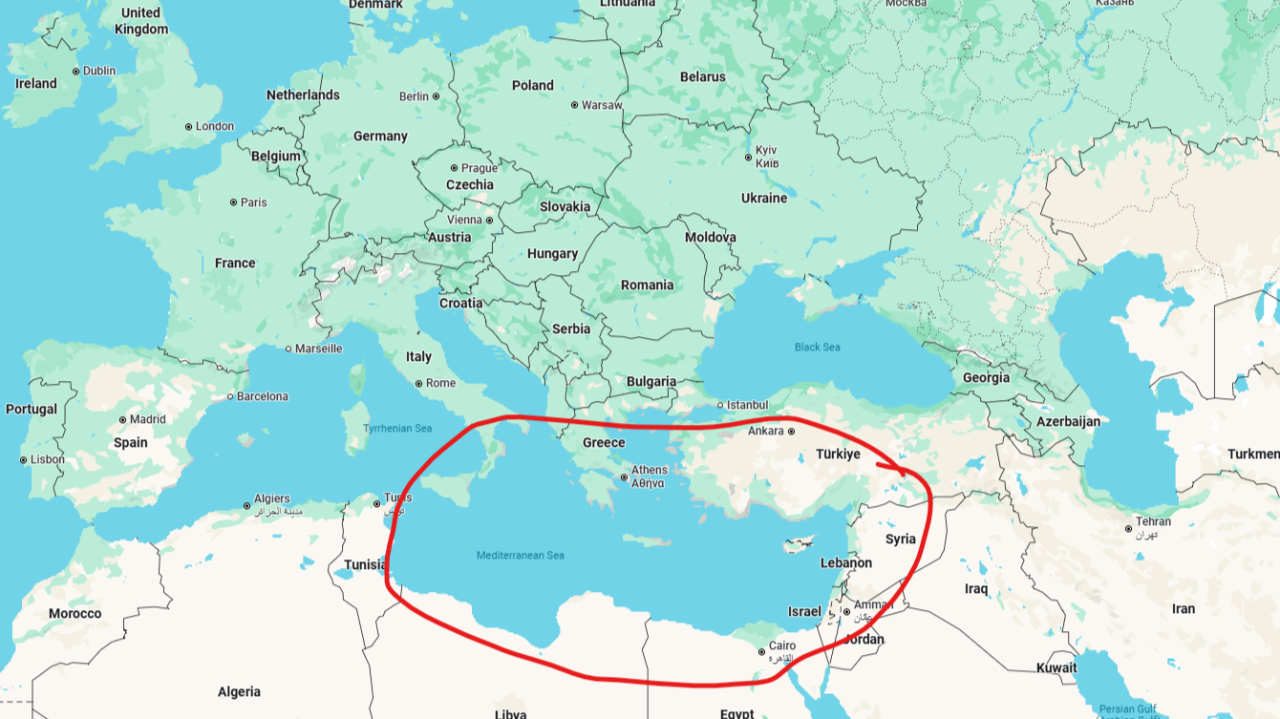
The European Union speaks of Strategic Autonomy, yet its neighborhood is being redrawn — not in Brussels, but in Ankara, Cairo, and Washington.
The Sharm el-Sheikh declaration made that reality visible. Four signatures, Trump's, Erdoğan's, Sisi's, and Tamim's. Not one European... Still, it reshaped the region more than any EU summit in years.
The return of realpolitik
Turkey has re-entered the Western room, not through charm but utility. Its mediation in Gaza, its balancing act between Washington and Moscow, and its presence in Libya have restored its leverage. Europe meanwhile, mistakes correctness for strategy. It quotes international law while others rewrite it on the ground.
Greek symbolism without strategy
Greece sits in the middle of this storm. The EU’s frontline in energy, migration, and maritime security. Yet, it behaves like a spectator.
While the Mitsotakis government defends itself against scandals of its own making, surveillance, corruption, OPEKEPE and the unhealed wound of Tempi, the country's foreign policy drifts on autopilot. Athens builds talking points while Ankara builds pipelines. Greece invokes legality while Turkey deploys assets. A polished performance, but no leadership.
The energy Mirage
The EastMed pipeline is history. Europe’s gas security now depends on LNG terminals from Spain to Alexandroupoli, not on grand subsea projects. Egypt and Israel act pragmatically, keeping ties with both Ankara and Athens, exporting through Cairo’s grid. The new map is modular, fast, and commercial, everything that Brussels isn’t.
Corridor diplomacy replaces consensus
While the EU keeps on debating, others are making bold moves. Turkey signs new MoUs with Libya. Israel reroutes gas. The U.S. focuses on flow, not formality. Even migration, Europe’s favorite talking point, has become a trade. Athens and Rome patrol for Brussels while Ankara and Tripoli monetize migration control. The E-Union manages symptoms, not systems.
Trade war at sea | The new front
This week, China imposed immediate port fees on U.S.-linked vessels, mirroring Washington’s tariffs on Chinese ships. Voyage costs are rising, and shipowners are already re-routing or reconsidering yard work in China.
For Greece, the world’s largest ship-owning nation, this is not distant noise. Each extra fee or delay hits the bottom line of a fleet that quietly underpins Europe’s entire trade network. Yet neither Brussels nor Athens has presented a coordinated maritime-trade response.
Europe’s missing doctrine
The EU still has no coherent external posture. The Commission talks of Autonomy. Member states chase bilateral deals. The External Action Service drafts statements.
The Result? Paralysis wrapped in process. Turkey reads it as weakness. Washington reads it as predictability. Beijing reads it as opportunity.
The Eastern Mediterranean could have been Europe’s test bed for strategic sovereignty. Instead, it became a case study in strategic outsourcing, energy to the U.S., mediation to Turkey and border control to Greece.
Greece’s crossroads
Greece should be the EU’s maritime anchor, bridging policy with operations, diplomacy with logistics. It hosts critical LNG infrastructure, commands one of the largest fleets on earth, and sits at the junction of three continents.
But that potential requires leadership capable of seeing beyond domestic optics. The next decade is being negotiated without Athens at the table, nor unfortunately, Brussels awake enough to notice.
What Europe must do
1. Build a maritime strategy. Energy security depends on logistics and naval capacity, not slogans.
2. Reclaim mediation. If Washington and Ankara are the brokers of Gaza, Libya, and Ukraine, Europe must re-enter as a convener, not a commentator.
3. Empower the periphery. Greece, Cyprus, and Italy aren’t border guards, they’re strategic hubs. Treat them that way.
4. Link trade and security. The U.S.–China maritime clash will spill into Europe’s freight costs. Prepare now, not after the next crisis.
The final warning
The Eastern Mediterranean isn’t waiting for Brussels. Turkey acts. Egypt trades. Israel recalibrates. The U.S. adapts. China experiments. Europe issues statements.
If moral posture were power, the EU would be a superpower. But in this world, leverage is measured in megawatts, tankers, and corridors.
Until Europe, and Greece within it accept that, others will keep drawing the map. And when they’re done, Brussels will once again mistake surprise for destiny.
Dimitris Galantis has over a decade of experience in offshore energy and maritime operations, bridging hands-on industry knowledge with digital transformation and AI adoption. He is the co-founder and director of Intoolecta, a consulting firm focused on strategy, technology, and workforce solutions.
Ready to build what works
Let's talk about your operation and where structure can make the difference.
