
Is Offshore Wind a Bubble?
Offshore wind isn’t a bubble—it’s a repricing. Higher rates, supply-chain limits and bad auctions stall projects until contracts adapt.

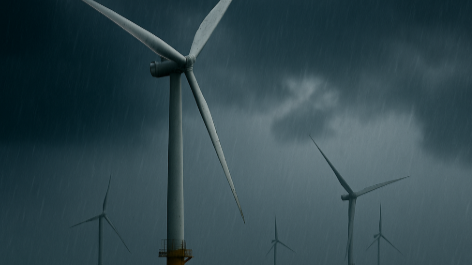
Bubble or not?
Every week brings headlines: failed auctions, cancelled projects, developers raising billions to cover losses. Commentators ask the obvious: is offshore wind a bubble?
The short answer is no. Offshore wind isn’t a speculative craze detached from reality. It’s a capital-heavy, policy-driven industry that is now going through a painful repricing. The demand is still there. The technology works. What changed is the cost of money, the strain on supply chains, and the gap between political ambition and industrial capacity.
What actually burst
A bubble bursts when value disappears. Here, what burst were assumptions:
• That financing would always be cheap.
• That “zero-subsidy” bids could last forever.
• That supply chains could expand without breaking.
• That ports and grids would be ready when needed.
Those assumptions were blown apart by inflation, higher interest rates, overstretched shipyards, and slow permitting. That’s not a bubble — it’s a reality check.
Why auctions are failing
In Europe, many governments auctioned offshore wind rights using models designed during the era of cheap capital. Some even pushed developers to compete on who could take the least subsidy, or in some cases, who would pay the state the most.
That logic collapsed once costs rose. Developers looked at the numbers and walked away.
The fix is not complicated:
• Introduce Contracts for Difference (CfDs) — subsidy contracts that guarantee a fixed electricity price for 15–20 years. They protect investors from extreme price swings while protecting consumers if prices fall.
• Index contract prices to inflation and commodity costs, so they stay realistic.
• Align auction schedules with when the grid and ports will actually be ready.
The bigger picture
Three layers need to be understood:
1. Demand: Electricity demand for renewables keeps growing. Europe still needs to cut gas imports and decarbonise. This is not in question.
2. Projects: Offshore wind farms are still bankable if contracts, ports, and grid connections are in place. The problem isn’t the turbines — it’s the conditions around them.
3. Industry: The supply chain (turbine makers, cable factories, installation vessels, skilled crews) is now the main bottleneck. That’s where costs and risks are concentrated.
This is why the narrative of a “bubble” is misleading. Offshore wind isn’t collapsing. It’s being forced to grow up, under tougher financial and industrial realities.
What smart players do now
Those who adapt early will lead the next cycle. Here’s how:
• Price projects realistically: Assume today’s interest rates, not yesterday’s.
• Secure stable contracts: Push for CfDs or equivalent mechanisms that balance risk fairly between investors and governments.
• Match ambition to infrastructure: Don’t plan farms faster than the grid, cables, and ports can handle.
• Collaborate early: Developers, turbine makers, port operators, and financiers need to align upfront. The days of assuming “someone else will fix the bottleneck” are over.
• Invest in skills: Engineers, vessel crews, and HVDC technicians are in short supply. Projects will stall without people.
The real story
So no, offshore wind is not a bubble. It is a sector undergoing repricing and restructuring after years of unrealistic expectations.
If governments redesign auctions with contracts that finance can trust, if grids and ports are built in sync with project timelines, and if industry invests in its people, the sector will not only survive — it will scale.
If not, the “bubble” narrative will become a self-fulfilling prophecy: not because the technology failed, but because politics and markets refused to adapt.
Dimitris Galantis has over a decade of experience in offshore energy and maritime operations, bridging hands-on industry knowledge with digital transformation and AI adoption. He is the co-founder and director of Intoolecta, a consulting firm focused on strategy, technology, and workforce solutions.
Ready to build what works
Let's talk about your operation and where structure can make the difference.
