
When Ships Become Hackable
Always-on ship connectivity exposes operational gaps, concentrates satellite power, and widens cyber risk—before crews and systems are ready.

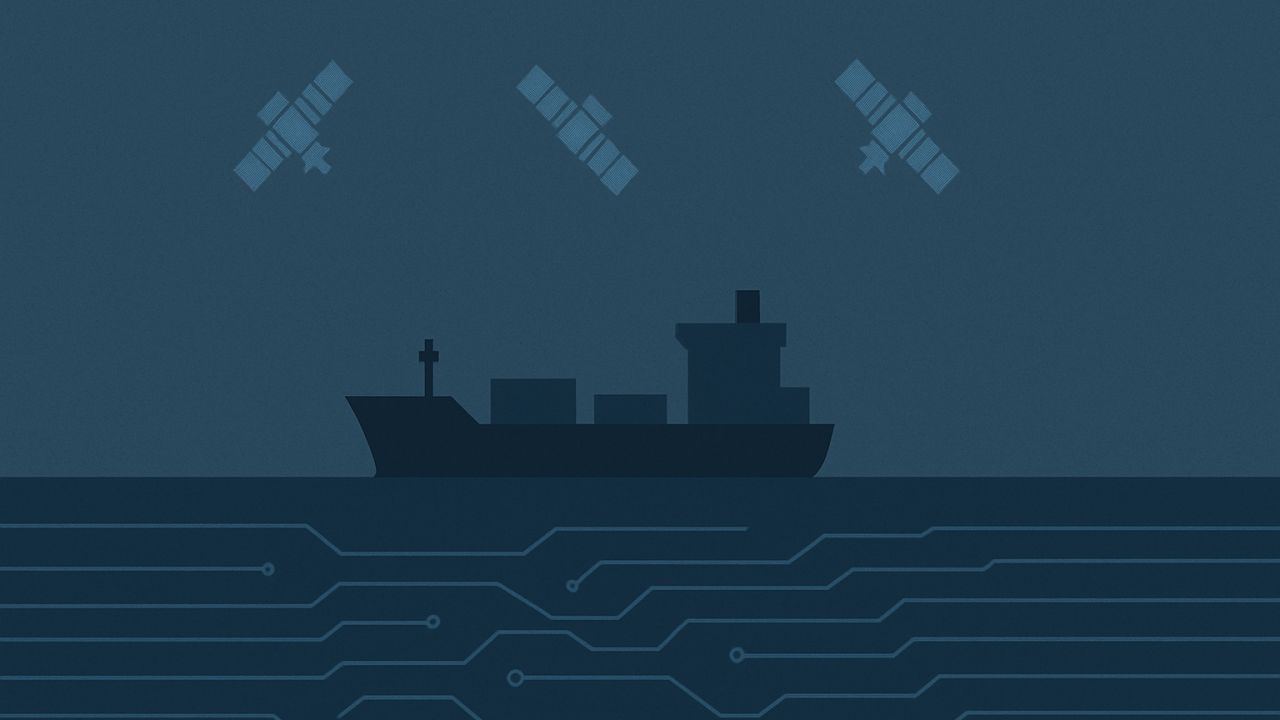
Global maritime fleets are entering a phase of continuous digital visibility. Satellite constellations such as Starlink, OneWeb, Kuiper and emerging national systems are pushing the industry toward full-time connectivity. This shift is not cosmetic. It changes how vessels operate, how risk is managed, and how power is distributed across the maritime domain.
Greater connectivity will immediately expose operational gaps that previously remained hidden. Real-time data from vessels will reveal:
• staffing shortages that affect safety
• maintenance tasks that are overdue
• compliance steps that are incomplete
• inefficiencies in crewing, logistics, and reporting
• fragmentation between outdated ERPs, paper records and email-driven workflows
These issues have always existed, but analogue systems concealed them. Digital transparency removes that insulation.
The second consequence is geopolitical. Maritime communications infrastructure is becoming concentrated in the hands of a few large private providers. When a single commercial network becomes the primary channel for ship-to-shore communication, the resilience of global trade is no longer just a matter of national capability. It becomes linked to the governance, the commercial strategy, and the political exposure of private technology firms.
Control over satellite networks influences who maintains connectivity during crises, who receives priority, and who can move information across borders. In an environment shaped by strategic competition between major powers, this dependency introduces new vulnerabilities into the maritime sector.
At the same time, increased connectivity expands the industry’s cyber-risk surface. Once vessels run systems that can be reached remotely, they become potential targets. This includes risks associated with GPS disruption, manipulation of navigation signals, intrusion into onboard networks, and ransomware aimed at operational technology. The industry’s preparedness for these risks varies widely, and cyber doctrine continues to evolve more slowly than exposure levels.
These challenges are emerging in parallel with structural workforce shortages and digital literacy gaps across global fleets. Many ships still operate with ageing equipment, limited training, and inconsistent standards for digital procedures. As a result, human factors remain the most common point of failure in cybersecurity and in technology adoption more broadly.
Despite these concerns, the maritime sector cannot avoid the transition. Offshore wind, LNG transport, subsea cable installation, emissions reporting, Arctic routes, and modern port logistics all depend on high-quality connectivity. Europe’s energy system in particular — now more reliant on LNG routes, floating terminals, and offshore infrastructure — cannot function through analogue processes or delayed communication.
This creates a fundamental paradox: The industry must digitize to remain competitive, yet digitization introduces risks for which many operators are not yet prepared.
Another important dimension is transparency. A sector that historically operated with limited external visibility will soon generate continuous data trails. This will change relationships between shipowners, charterers, regulators, insurers, and crews. Operational weaknesses that were once absorbed quietly will become measurable and attributable. Decision-making will become more evidence-based, but also more exposed.
To manage this shift responsibly, maritime organizations will need to:
• diversify communication channels to avoid single-provider dependency
• strengthen onboard network architecture and access controls
• modernize ERPs and integrate fragmented data flows
• establish realistic cyber-response frameworks
• invest in digital upskilling for crews and shore staff
• adopt disciplined operational processes that reduce exposure
Connectivity is no longer an optional enhancement. It is becoming a core component of operational security and strategic resilience.
In the coming decade, maritime safety will be shaped not only by physical assets but by the robustness of the digital networks and processes that support them. The challenge for the sector is to move toward connectivity with discipline, ensuring that transparency becomes a foundation for stronger operations, rather than a source of new vulnerabilities.
Dimitris Galantis has over a decade of experience in offshore energy and maritime operations, bridging hands-on industry knowledge with digital transformation and AI adoption. He is the co-founder and director of Intoolecta, a consulting firm focused on strategy, technology, and workforce solutions.
Ready to build what works
Let's talk about your operation and where structure can make the difference.
