
Where Maritime Meets Big Tech | The Divide That Matters
Maritime tech fails when it adds clicks. Real value is embedded upstream in design, engines, insurance—and SMEs pay the cost.

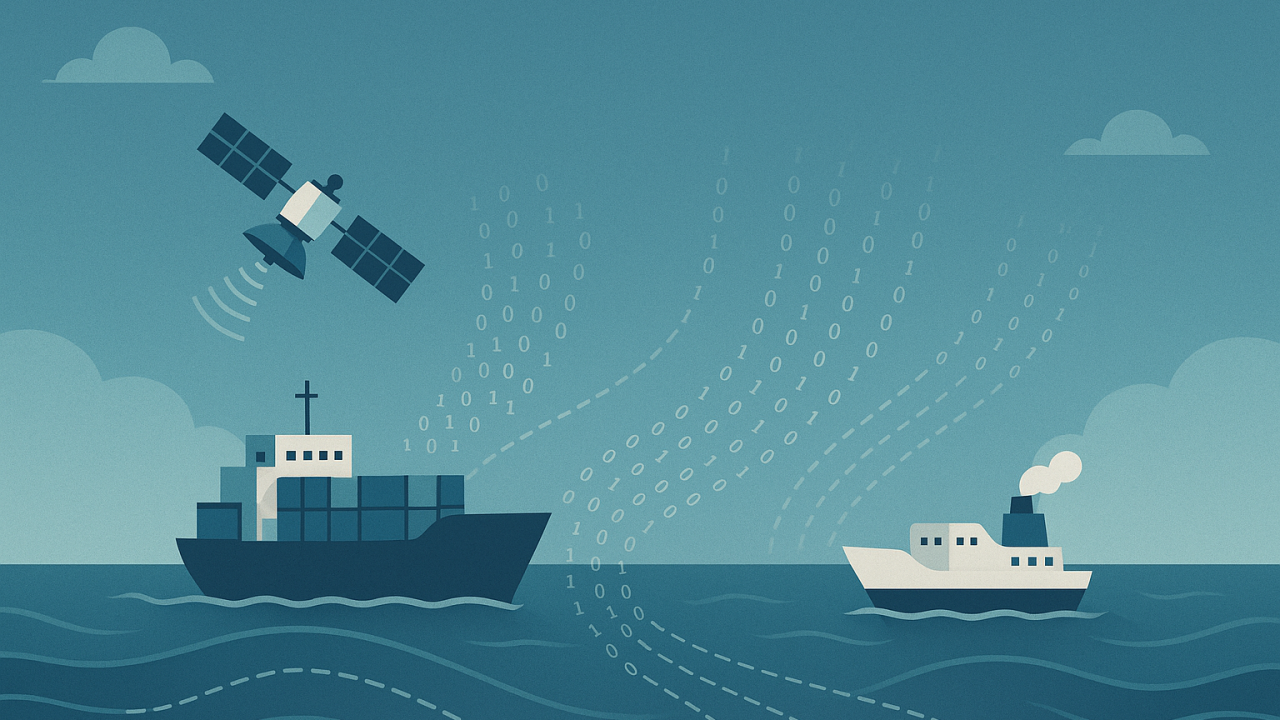
Maritime is the backbone of global trade. Ninety percent of what we consume moves by sea. It’s slow-moving, capital-heavy, and brutally exposed to geopolitics.
Now comes Big Tech — flush with cash, armed with algorithms, and promising to “optimize” what seafarers, yards, and operators have managed for centuries.
So where do these worlds really meet? And why is so much “maritime tech” failing?
Why is Maritime Tech keep failing?
Most digital solutions for maritime crews, port calls, or compliance dashboards fall flat. Why?
• There's an adoption gap. Crews don’t have time or bandwidth for tools that add clicks but don’t save hours.
• There's a cultural mismatch. Silicon Valley builds for seamless internet environments; maritime operates in steel, storms, and satellite lag.
• Incentives are misaligned. Startups chase VC growth metrics, not the slow, incremental safety and efficiency gains operators actually value.
• There are parallel systems in place. Paper, Excel, and legacy processes still run in the background. New tools become an extra burden, not a replacement.
That’s why so many “smart apps” quietly vanish after a pilot phase. They don’t integrate with reality — they sit on top of it.
Where the real tech is happening
The quiet transformation isn’t on the bridge, it’s upstream.
• Ship design simulations shaving drag before steel is cut.
• Fuel control systems embedded in engines, not apps.
• Insurance models that decide risk pricing long before a voyage.
• Grid planning tools that shape where subsea cables and offshore wind farms land.
Here, tech is invisible — you don’t “adopt” it. You live inside it. This is the real frontier, and it’s where value sticks.
The hollowing of the middle
What happens in between is more worrying.
• Operators and coordinators — once the backbone of maritime execution — are being hollowed out.
• Many are turning freelance, surviving on short contracts but losing influence over strategic direction.
• Decisions are moving upstream into code, contracts, and regulation. Crews remain accountable, but less empowered.
It mirrors politics if you think about it. The middle class carries the responsibility but is no longer involved in writing the rules.
Clash or blend?
Will Big Tech swallow maritime? Not entirely. Maritime is too capital-intensive, too bound to safety and sovereignty. You can’t move fast and break things with a vessel that costs half a billion and crosses sanctions zones.
But the blend is already happening. Big Tech sets defaults — financing models, compliance frameworks, emission accounting. Maritime delivers the execution — ships, crews, yards. It’s not an equal marriage. One writes the code and the other follows it.
SMEs on the front line (the hidden story)
Take a small maritime services firm. A decade ago, its struggle was juggling faxes, crew binders, and project bids. Then came GDPR. Then Paris Agreement targets. Then AI dashboards promising to automate “everything.”
Instead of relief, each wave added cost. Licenses, parallel systems, compliance overhead. The hidden cost of transition lands hardest on SMEs and crews — while large corporates absorb it with scale.
Yet this is where opportunity still hides: lean, disciplined SMEs that integrate tech carefully — stripping out waste instead of adding layers — can actually gain ground as bloated structures fail.
For how long will this last? It mostly relies on how policies are written and how fast change is implemented. Maybe something for the next century...
The message
Maritime Tech isn’t failing because crews are “old-fashioned.” It’s failing because it chases disruption while ignoring discipline. Because it tries to digitize symptoms instead of embedding solutions upstream.
The clash with Big Tech is real, but not fatal. The industry won’t be “swallowed.” It will be reshaped — with the middle squeezed hardest.
The lesson? Stop building dashboards nobody uses. Build systems crews can live inside. Stop chasing disruption. Deliver discipline.
Because maritime isn’t a playground for hype. It’s the backbone of trade — and it will not bend to tools that don’t respect reality.
Dimitris Galantis has over a decade of experience in offshore energy and maritime operations, bridging hands-on industry knowledge with digital transformation and AI adoption. He is the co-founder and director of Intoolecta, a consulting firm focused on strategy, technology, and workforce solutions.
Ready to build what works
Let's talk about your operation and where structure can make the difference.
