
Why Power Needs Structure - Europe's Energy Architecture
Energy needs structured grids to flow. Capital needs structure to move. Europe’s challenge is building both.

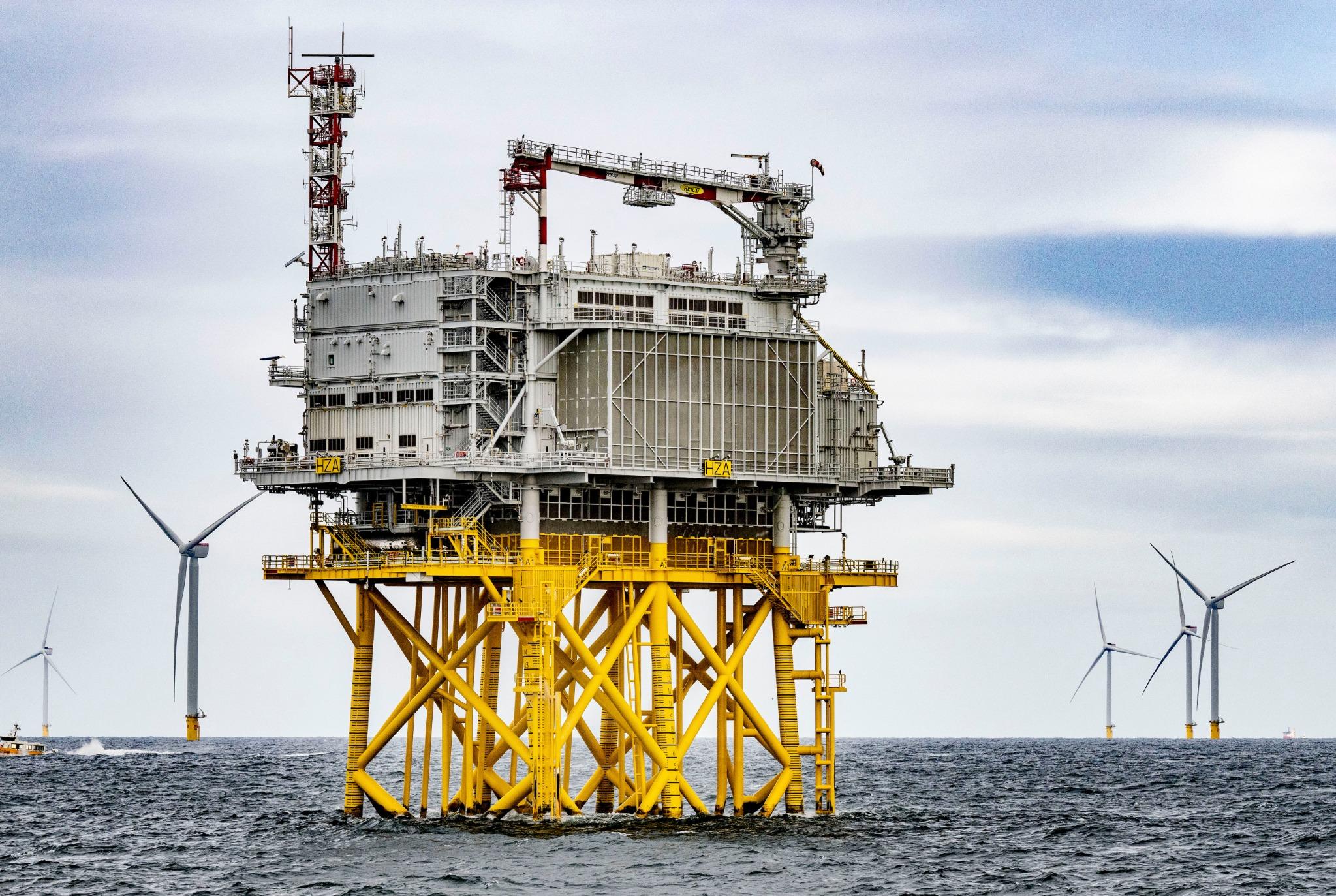
Over the past decades, energy has been treated as both an economic resource and a geopolitical instrument. Oil routes, gas pipelines, and maritime chokepoints have shaped alliances, conflicts, and strategic decisions across regions.
That relationship is not new. What is changing is the role energy now plays.
Electricity is becoming central not only to industry, but to digital infrastructure, communication networks, and security systems. Data centers, satellite networks, and defense platforms all depend on stable and scalable energy supply.
This shifts the problem.
Energy is no longer only about supply.
It is about whether infrastructure can support what depends on it.
For Europe, this raises a structural question. Not how to produce energy in isolation, but how to organize it across a fragmented landscape of national grids, regulatory frameworks, and uneven investment priorities.
Systems do not expand because there is demand for them. They expand where infrastructure allows them to operate reliably, and where capital can be deployed with some confidence.
This has been true for railways, for telecommunications, and for earlier phases of electrification. Once the underlying system reached a certain level of stability, capital followed and industry adjusted around it.
The same dynamic is now visible again, but under different conditions.
Electricity systems are expected to support more than traditional industrial demand. Electrification is extending into transport, heating, and parts of production that were previously disconnected from the grid.
At the same time, large-scale computing infrastructure requires continuous power supply, stable connectivity, and physical conditions that can support long-term operation. These are not marginal requirements. In some locations, they are already influencing where new capacity is built.
Security systems are also becoming more dependent on digital networks, data processing, and communication infrastructure. These dependencies are not theoretical. They shape how systems are designed and where they can function effectively.
What matters here is not the individual components, but the conditions under which they can operate together.
Where energy supply is unstable or uneven, other systems adjust around that. And where infrastructure is reliable, that's where more activity concentrates.
Infrastructure does not just support systems.
It determines where they can exist.
Seen from this perspective, Europe’s position is less about shortage and more about structure.
The continent has diversified energy sources, established industrial capacity, and access to capital. The issue is not absence, but organization.
Electricity systems remain largely national. Interconnections exist, but their capacity and coordination are uneven. Price differences persist across regions, and electricity cannot always move where it is needed.
This reflects how these systems were built. They were designed to serve national priorities, under different regulatory frameworks and timelines.
What has changed is the environment in which they operate. And as demand becomes more continuous and less predictable, the limits of fragmentation become more visible.
Surplus generation in one region does not reliably offset shortages in another. Industrial users face different cost structures depending on location. Planning and permitting timelines vary a lot. Investment decisions are shaped by boundaries that do not reflect how systems actually operate.
At the same time, infrastructure linked to computing and communications develops differently. It tends to concentrate where conditions are stable enough to support scale.
Reliable energy. Predictable regulation. Physical connectivity.
When these conditions aren't met, activity shifts.
The system does not fail.
It becomes selective.
This is where the question of the grid becomes unavoidable. Energy debates often focus on how electricity is produced. Wind, solar, gas, nuclear. These questions matter, but they do not address how the system functions as a whole.
What determines whether energy can support industry and infrastructure is how effectively it can be moved, balanced, and made available where it is needed.
A more integrated European electricity system would not remove volatility or external pressure. It would change how these are absorbed.
Differences in production profiles could be balanced across a wider area. Regions under pressure could be supported more directly. Industrial users would operate within a more consistent environment.
This is not about optimization. It is about basic coordination.
Without it, systems continue to develop unevenly. Infrastructure linked to energy, computing, and industry does not align. Over time, this leads to concentration in some regions and stagnation in others. With it, coordination becomes possible.
Structure does not eliminate risk.
It defines how risk is managed.
Technology does not sit outside this system. It depends on it. Digital infrastructure, communication networks, and data systems all rely on stable energy and physical connectivity. Their performance is tied to the conditions in which they operate.
This is not a question of innovation. It is a question of dependency.
Advanced systems require stable inputs. When those inputs are uneven, the systems built on top of them reflect that instability.
At this point, the role of capital becomes clearer, but it does not need to be overstated. Capital does not create coherence between systems. It responds to it.
Where infrastructure is reliable and scalable, investment tends to follow. And where conditions are fragmented, investment becomes more cautious or shifts to environments where coordination is easier.
This is observable across sectors. It does not depend on ideology.
Europe has the components required to build resilient systems. Energy resources, industrial capacity, financial depth, and technical expertise are present.
What remains uncertain is whether these can be aligned.
That alignment does not emerge automatically from markets or policy cycles. It requires decisions that operate at the level of systems, not individual assets.
The question is not whether Europe has enough.
It is whether what exists can work together.
Because in the end, capacity is built where systems hold.
Dimitris Galantis has over a decade of experience in offshore energy and maritime operations, bridging hands-on industry knowledge with digital transformation and AI adoption. He is the co-founder and director of Intoolecta, a consulting firm focused on strategy, technology, and workforce solutions.
Ready to build what works
Let's talk about your operation and where structure can make the difference.
